New York-based freelancer and PhotoShelter user, Robert Caplin, likes to experiment. Earlier this year, he picked up a Canon 5D Mark II and started to play with the video options. But instead of recording something banal like taxis outside his window, he decided to make a music video of his sister.

That experience got him hooked on the moving pictures. He helped create a short film entitled Betrayed, and then started playing around with time-lapse photography with a static mount as well as a moving mount that is typically used with telescopes to track the movement of stars.

A few weeks ago, he stopped by our offices to show us some of his tests, which were just a pre-cursor of his time lapse photography of the 2009 World Series.

World Series Time-Lapse by Robert Caplin from Robert Caplin on Vimeo.


Not only is it well-composed and interesting to watch, but it seems like great stock footage material...

And yes, he also shot some stills of the game.
| Comments (2)
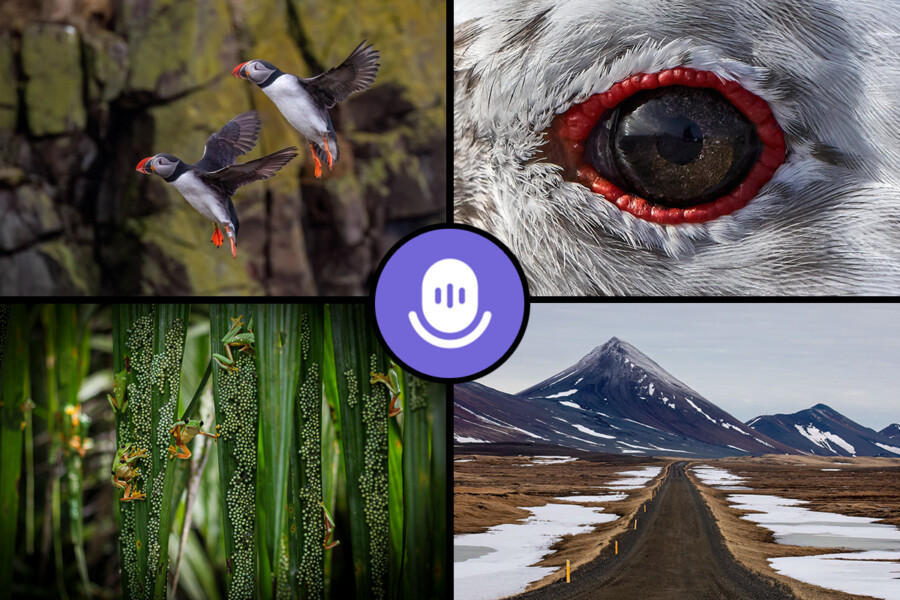
Congratulations to our November Featured Photographers! You'll enjoy this month's broad selection of outstanding creative and editorial images by PhotoShelter photographers.  Our diverse spotlight for November includes bodybuilders, travel lifestyle, nature and live music.      
We encourage you to check out our featured photographers' work in the "Images" tab of the PhotoShelter homepage slideshow, as well as their PhotoShelter websites in our product tour.

Highlights include:

Check out the full selection of November featured images here:


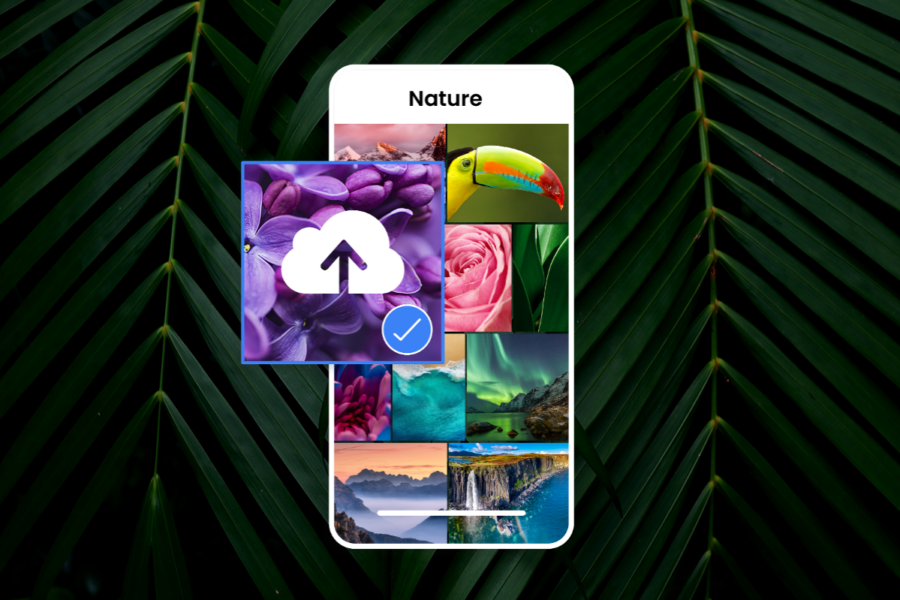
Like what you see? Embed our November featured slideshow in your own website or blog by clicking the up arrow in the lower right of the slideshow.

Why don't you submit your images for the December slideshow consideration? Images must be submitted by the 20th of the month, and winners are posted on the first Tuesday of the following month.


| Comments (0)
Last week, we introduced a Facebook export feature that allows PhotoShelter users to either send their images to a Facebook album, or post a link on their wall. We received a great reception, but photographers immediately starting asking us for the ability to post to their "Pages."

In case you're unfamiliar with the lingo, Facebook users can set up "Pages" which are separate from their personal profiles. This can be pretty handy for their businesses, hobbies, etc. For example, I know Doug Murdoch, but I'm a fan of his company "Think Tank Photo" which has a page on Facebook.

Here's what the new interface looks like with the "Post on Fan Page" button:

post-to-facebook-fan-page.jpg

But not only can you post to the Pages you've created, you can also post to the pages of which you are a fan.

post-to-facebook.jpg

Once you select the page destination, you can fill out some text that goes along with the Wall post.

post-to-facebook-fan-page-wall.jpg

Nifty, right? We think this will save you time by avoiding double uploads. More good stuff is in the pipeline, so stay tuned....


| Comments (7)
to-tweet-or-not-to-tweet.jpg

Social Media is the buzz word in marketing nowadays, and services like Twitter have gone mainstream. But should photographers use Twitter as a marketing tool?

Let's start by acknowledging that social media services like Facebook, Twitter and LinkedIn are real phenomena when it comes to business marketing. Everyone from accountants to plumbers are finding new audiences and paying customers by leveraging social media. As far as photography goes, I've picked up paying jobs by simply having a presence on Facebook and posting new photos on a semi-regular basis. The easy flow of information (text, pictures, video) through these networks acts as connective tissue for new businesses.

Twitter claims to have 25 million active users, and like any social network, you have to explicitly "follow/friend" users -- this "opt-in" makes this inbound marketing so much more powerful than the unsolicited e-mail or postcard of yesteryear.

But even given the size of the "addressable population" and the strong connectedness, should photographers use Twitter?

There are two key components to determine to answer this question:
1. What are your goals?
2. What do your analytics say?

GOOOOOOOOOOAL!
Goals are a funny thing. When we think of Twitter or Facebook, it's too easy to be seduced by the number of followers or friends. What are you -- in junior high school? This isn't a popularity contest. Numbers are meaningless if we don't have a goal. It's like saying you have 10 best friends, but none of them will meet you for a drink.

A lot of photographers will tweet with no business goal in mind. If you're trying to sell photos or photographic services, what is the value in regurgitating links to other websites? Or trying to be the wittiest person online?

I fully understand that you don't want to come across as a schill or schmuck, so there needs to be a balance of self-promotion. But when you are in self-promotion mode, why the heck are you sending people to a blog post or gallery of images with no discernible "point of conversion?"

  • If you want to get hired, then you need to 1) make it clear that you're available for hire, and 2) make it easy to contact you.
  • If you're looking to sell images, then your website needs to have e-commerce.
  • If you're looking to audience build, then don't "dead end" your content. Point people to other content on your site, or allow them to sign up for newsletters and RSS feeds.
You need a goal because with out it, we can't answer the "return on investment" question which is central to understanding whether it's worth it to tweet.

THE ANALYTICS TIE-IN
You'd be hard pressed to be a Twitter pro without knowing of the URL-shortening service bit.ly. Although services like tinyurl preceded it, bit.ly's success is due in part to it's ability to provide tracking statistics like how many people clicked on that link.

At a bare minimum, you'll want to know this because you can never tell how many people actually see your tweet. There's no "pageview" equivalent in Twitter.

But once again, knowing a click-through rate (CTR) isn't really that helpful if we can't tie in a goal. Let's say you publish your favorite images as prints for the holidays on your website. Then you post the link on Twitter, Facebook, and your blog. Even if you know that Twitter sent you 100 visits and Facebook sent you 60 visits, I'd argue that it's not enough information to say that Twitter is a better marketing tool.

Why? Because you might get 100 visits from Twitter but only 1 sale. Whereas Facebook might send you 60 visits with 4 sales. Quality of traffic is much more important than quantity of traffic, and you can't make this determination without tying in analytics.

GO CAMPAIGNING
Google Analytics has a concept of "campaigns." It's an easy way to add tracking variables to any link to your website that you post online. When people click on the link, your Google Analytics will use cookies to track their activity. If you have a "goal" set up in Google Analytics (e.g. an e-commerce sales funnel), you can now determine:

  • the number of visitors that came to your website from Twitter
  • how that traffic compared by various site usage metrics (e.g. time on site, page views, etc)
  • what percentage of those visitors completed a sale
At PhotoShelter, we use this all the time. When we have a discount code for example, we'll use the Google URL Builder to add campaign codes. Then we'll use bit.ly to shorten the URL and then post it on Twitter.

Now we can see specifically how our general and specific Twitter activity ties into our bottom line.

THE FINAL WORD
Participating in social networks can be fun, so if you're having fun, tweet to your heart's content. But for a lot of you, time and resources are probably always squeezed and that's why I'm advocating an analytical way to determine whether tweeting is worth it.

By the way, follow us on Twitter @photoshelter.

| Comments (4)


First the obvious: a lot of people use Facebook. Over 300 million people use the service, and it's become the most popular social network. Irrespective about how you feel about Facebook, it's impact is undeniable, and it's ability to act as a marketing tool is becoming increasingly clear.

The business implication became clear to me last year when I posted an album of portraits, and then a "friend" hired me to photograph him. Posting images on Facebook is a way to passively market yourself to a qualified audience for free.

(I know, the terms and conditions are worrisome, but more on that in a second)

So I'm pleased to announce our new "Post to Facebook" feature that we released today. You might say to yourself, "well, duh!" And I would nod my head in agreement. It's an obvious piece of functionality. But we've done it slightly differently than other implementations that I've seen.

From your PhotoShelter gallery, you can click the "send to social networks" link, and then use "Facebook Connect" to link your accounts. Then you have two options:

  1. Post to your Wall: For those of you who don't want to upload content to Facebook because of concerns over their T&C, you can post a link to your Wall with a message. Facebook will display a preview of a few images with a link back to your website. Here's what a wall post looks like:


  2. Upload Images: Alternately, you can actually upload images to Facebook from your gallery. We'll create a new album with the same name as your PS Gallery, then upload the images. After the upload is complete, you get a chance to review the images and set the album permissions before posting them to your "Photos" tab. Just remember that Facebook has a 200 image limit per album.

Pretty nifty, huh? It's a great time saver, and a cool way to go social.

Stay tuned, we have more cool features up our sleeves....


| Comments (13)
Another great PhotoPlus Expo has come and gone, and I figured the best way to recap would be to use some pictures.

We were a sponsor of the inaugural Magnum Expression Award, which had a really neat display of photojournalism in the main entry way to the Expo. Over 17,000 images were submitted from photographers in 170 countries. And the winner is a fantastic Belgian photojournalist Bieke Depoorter. You can view all the finalists.

ppe1.jpg

Bieke wins a $10,000 grant to pursue her photography projects and a very cool HP large format printer -- you know, the kind of printer that could output a nice photo and logo.

ppe2.jpg

Andrew held court while demonstrating PhotoShelter.

ppe12.jpg
Photo by Robert Caplin

As usual, Cradoc provided some great coupons for fotoQuote, fotoBiz and fotoKeyword Harvester. As you might know, fotoQuote's pricing system is built into PhotoShelter (by the way, PhotoShelter users can take advantage of a fotoQuote member discount). Rachel knows it, and look how happy she is.

ppe4.jpg

Sports photographer Brad Mangin and New York photojournalist David Brabyn donated their time to help other photographers understand how they were using the system.

ppe13.jpg
Photo by Robert Caplin

Robert Caplin managed to get this great show of all three bald PhotoShelter guys in one shot. That's Mike, Andrew and Grover.

ppe14.jpg
Photo by Robert Caplin

When the Expo was over, we carted our gear to the corner, then waited for an hour in the rain for our van to show up. That's what we get for hiring a guy off Craigslist.

ppe5.jpg

After we dropped the gear off, we headed over to the Heartland Brewery next door to the PhotoShelter offices. Vince Laforet stopped by for a drink and we battled over the paradigm change. I only photographed him at ISO 3200.

ppe6.jpg

Caroline told a story that mesmerized Thom.

ppe8.jpg

Then someone suggested that we go to a karaoke place in Koreatown. They had smoke and lasers.

ppe9.jpg

Grover and I got tired early because we're old. But we had to meet Brad at Walker's for a night cap where he was hanging out with Corey Rich.

ppe11.jpg

You'll notice my photo of Corey is out of focus. Corey doesn't have focus problems as you can see by the tack sharp photo he took of Grover, Jose Azel and me. Yes, I really was that tired.

ppe10.jpg

I also spoke on a Ellen Boughn's panel with Fred Benenson from Creative Commons, Rahul Pathak from LookStat, and Candice Murray from Imagespan. Tried out a Nikon D3s. Chatted it up with Dennis Walker from Camera Bits, Doug Murdoch from Think Tank, Michael Costuros from Livebooks, Justin Stailey from Leica, John Harrington from Photo Business News, and a ton of cool photographers. See ya next year!


| Comments (1)
CNN.com is my browser homepage, and I don't know why.

Let's put aside their unhealthy obsession with Twitter, their reliance on entertainment coverage to boost their ratings, and the god awful, overly Photoshopped portrait of Campbell Brown. Instead let's talk about their use of photography.

Still photographers have been told for years that the time was coming when video stills would be pulled from cameras that rivaled or exceeded the quality of DSLRs. In the past year, we've seen how the Red Camera and Canon 5DMKII have actually made this possible -- Esquire published a cover image that was grabbed from a Red video. The threat to still photography is palpable, and perhaps concerning (or exciting).

And then there's CNN.

This is the cover of their newly redesigned website. Take a look at the central image. It's a video grab. Now tell me what it is, and why would I want to click on it?

cnn.jpg

Wanna see it a little closer?

cnn2.jpg

A washed out photo with child's "floating head", and absolutely nothing compelling that would make me want to click on the story. My friend, Andrew, who isn't a photographer nor works in the industry commented:

"NYT's layout isn't much better organizationally, but it has gorgeous type and photography. Shit matters."

As we say on the Internet, "iawtc."

I'm perfectly aware of the limitations of what they were working with. This is a featured video story. They didn't have a still photographer there. But this is their brand. As Andrew said, "Shit matters." And as much as we acknowledge that cell phones make "good enough" images to cover spot news, this isn't one of those cases. Have individual stories within the 24-hour news cycle become so irrelevant that journalists and their publishers have lost all sense of integrity in the presentation of information?

I'm glad to see that CNN has reduced their use of strangely composited photo illustrations, but here's hoping that they hold good photography in higher regard.


| Comments (2)
ppe-2008.jpg

The PhotoPlus Expo starts today! Come visit PhotoShelter in booth #172. Here's what you should know:

  • Get a website check-up at our booth and see if your website is stuck in the 20th century or not.
  • Pick up a copy of our mini-magazine: Shift/Reload
  • Talk to awesome PhotoShelter photographers like Brad Mangin, Ed Mulholland, Robert Caplin, David Brabyn, Stacy Bass and Chris Owyoung.
  • Pick up a discount coupon for fotoQuote, Keyword Harvester and fotoBiz all from Cradoc fotoSoftware.
  • Check out our friends at CameraBits (booth #967) to get a sweet deal on Photo Mechanic
  • Come to Ellen Boughn's panel on "Selling Stock Direct" featuring yours truly.
  • mmm, Nikon D3s. mmmm, Canon 1D Mark IV. mmm, Leica M9.
See ya in a few!


| Comments (1)
sf_gold_rush.jpg

Daryl Lang at PDN reported that Getty Images is shutting down its wholly-owned stock division. This division was staffed by researchers, producers and photographers who shot specific themes which were considered to be trendy or evergreen (e.g. a NASCAR-like racetrack shoot without logos or other IP problems). The intent was to own the images outright so that royalties need not be paid to photographers.

It's been just over a year since we shut down the PhotoShelter Collection - our ill-fated attempt to bring diversity into the stock photography market while giving the photographer the majority of sales. At the time (and probably still), many photographers felt duped, and hurt that we didn't give it more time to mature. But now that we're many months away from that traumatic event, I can restate the following: Stock photography sucks. I'm not talking about the people who shoot it. I'm talking about the state of the industry. But let's digress for a moment.

A brief primer on the California Gold Rush. In 1848, a guy found some gold near Sacramento. Despite attempts to keep the news quiet, word got out pretty quickly, which set in motion a migration of some 300,000 people to California around 1849 to prospect for gold.

The early entrants into the scene made some money, and the merchants that were supporting the Gold Rush (anyone heard of Levi's?) also did quite well. Innovation thrived as prospectors looked to become more efficient at finding gold. But as the field got crowded, and the gold became increasingly harder to extract, many people actually ended up losing money. And today, to be a player in the gold market, you need a massive infrastructure to mine and extract gold (and apparently a lot of acid). (and sure, gold is selling for $1000/ounce, but that's arguably a reaction to currency fluctuations in an uncertain economy rather than usable demand).

Oh yeah, about stock photography....

A small group of people used to make a lot of money in stock -- as they should have. It was hard. It was often expensive to produce. There was no digital and there was no Internet. But around the turn of the millennium, things changed dramatically. Technology intersected with a business model (namely, microstock) and created a massive disruption. You want paradigm shift? This was a paradigm shift.

The hobbyist had a marketplace, and he had the tools (in-camera and in Photoshop) to rival/exceed the quality of many pros. He had disposable income to buy equipment which the manufacturers loved. Stories about guys making $100,000s/year emerged. Social networks like flickr helped create a community for the photo enthusiast -- a term that used to conjure up "guy with camera" taking creepy nudes at a camera club down by the shore. First movers of these new marketplaces like iStock and Fotolia made millions. Most importantly, the people who traditionally paid a few hundred dollars for an image, were now paying $1 because budgets were getting slashed.

The average stock photo simply isn't worth what it once was.

I consider myself to be a pretty decent photographer, but when I search for an image on iStockPhoto, I'm blown away. There are some very good photographers with Photoshop skills that make up for any lack of talent or equipment. And the proof of the paradigm shift to me? I've purchased iStock images when I've determined that I can't shoot something better myself. Why spend 2 hours setting up a shot to come up with something inferior, when I can buy something for a few bucks. Should I be hung? Next time your spouse asks you to help throw together a marketing brochure for his/her company, what are you going to do to get that nice photo of a clock?

So as I was saying, stock photography sucks. It's not that you can't make money. It's just much harder than it used to be. Generalists won't survive. We have enough yellow rubber ducks against seamless. You have to specialize and understand who's buying to really succeed. Guys like Masa Ushioda will be fine. But maintaining a staff with salary and benefits to produce seasonal content while facing downward pricing pressure from another one of your properties....forget it.

Where does that leave us? There are probably enough stock photos out there already to satisfy most needs for a long time -- at least at the price that buyers are now willing to pay. So photographers who are reliant on checks from Getty should get used to it getting smaller (I know, you already are). If a buyer can't find what they want, they'll probably still commission photography. But if you want to compete at that level, you really need to be a good photographer, not just a guy with a camera. There are fewer individuals making enough money from stock photography to support themselves. The traditional marketplaces like Getty are reaching around the darkness, and while they were still a public company, the only bright spot was iStockPhoto.

(The one bright spot in the Getty announcement, if you can call it that, is that this ends "wholly owned" content and puts the rights back in the hands of the photographer -- at least as far as Getty is concerned)

Don't enter a market at the end of the lifecycle. You'll always get burned. If you want to play the stock photography game, don't leave it up to chance to make sales. Understand who is buying the images you're shooting, and make sure your marketing plan includes them. This might mean building a clientele and licensing directly. It might mean moving to footage. It might mean none of the above. Like so many creative endeavors in life, the best creatives aren't necessarily the ones who succeed. The average photographer with superior business sense will continue to dominate.

Speaking of stock, come join me for Ellen Boughn's panel at PhotoPlus Expo on Thursday at 1:15pm at the Javitz Center in New York. It'll be a great time to learn from the panel or throw tomatoes. Either way, hope to see you there!


| Comments (14)
canon-1d-mark-iv.jpg

With today's launch of the new Canon 1D Mark IV, Vincent Laforet stated in his blog:

"I think it's safe to say that every single filmmaker and photographer has always dreamed of cameras that can see what our naked eyes can see.  This time these cameras can actually see more.   Sure - they may not have the dynamic ranges of our eyes just yet - but they see more than my naked eyes can see in low light.

"Period.

"And that's qualifies as a paradigm shift in my book."

I'm about to make a semantic argument with Vincent.

First, let's state the obvious. Vince's first short film that he created on the Canon 5D Mark II was pretty mind-blowing. While no one was about to hand out an Emmy for "Reverie," and there were surely many professional film guys who probably rolled their eyes, the fact is that it was a defining moment in D-SLR history to have pro-level video output on a still camera. We've been talking for years about "convergence" and "hybridization" and the 5D was definitely an inflection point where talk became reality. And like everything Vince does, thousands of photographers were inspired.

The 5D was a paradigm shift. It allowed for dual (simultaneous) capture on a single device. It spawned a crapload of videos on Vimeo -- some of very high quality -- which made it seem like professional film making could be attained with a $2500 camera. It certainly was a paradigm shift for Vince as he contemplated ways to focus on something other than the still image that had defined his career up until that point.

But let's be clear, the paradigm shift was niche. A hardware paradigm had shifted -- not so much a creative one. Yes, the ante has been upped for professional D-SLRs to include video capture capabilities. But has it really resulted in either a 1) creative paradigm shift or a 2) commerce paradigm shift? In my opinion, no.

Newspapers have, for years, been trying to figure out how to monetize multimedia. The CD-ROM of the early 90s, gave way to the slideshow with audio, to fast cut video with After Effects. But who is really making money with video? Brian Storm? Check. YouTube? Check. Your local newspaper? No. Your aspiring filmmaker? No. You? Probably not.

Does the inclusion of ISO 6400 video constitute a paradigm shift? Are your wedding clients going to suddenly pony up another $2000 so that you can shoot the first dance at high ISO? Are you suddenly going to find an untapped market for stock footage in near-dark conditions?

Here's the thing. While the technology has improved, good movie making still requires:
- a non-trivial investment in additional hardware and software
- a good story and script
- a good director
- good editing
 
But you and I aren't going to pick up a Mark IV or D3s and suddenly become proficient at screenwriting. We aren't going to become expert at non-linear editing. Forget mastery of the software, all of these things require skill and experience. And there is no level of technology that will replace the hours that are required to do something well -- whether it's playing basketball, designing a building, or making a movie.

Do I want a D-SLR with video? Yes. But I don't, for a second believe, that it is going to turn me into the next Polanski Spielberg without dedicating 10,000 hours (wink at Gladwell) to become an expert.

Vince will continue to create films and images that inspire and awe. The Mark V will be better than it's predecessor. But a true paradigm shift will require more than better low light capabilities. A true paradigm shift will alter the consumption of video by the mainstream, and shift dollars and eyeballs from the status quo.

The Mark IV is cool, but what's cooler with today's announcement was this statement from Vince:

"Once again - we had very very little time to prepare.  Just under 72 hours.  And we were
ALL busy working on other jobs as this economy seems to be awakening again."

That's a shift we can all get behind.

| Comments (13)
Read More: 1 2 3 4 5 6 7 8 9 10 11 12 13 14 15 16 17 18 19 20 ... 35 Next