Share
Photoshop Is Devious, Deceptive, and Wrong – Right?
Critics say that photo manipulation is devious, deceptive, and becoming nearly impossible for viewers to differentiate between a manipulated image ...
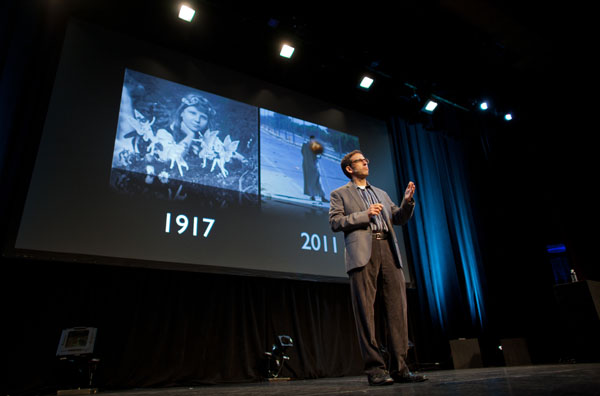
Critics say that photo manipulation is devious, deceptive, and becoming nearly impossible for viewers to differentiate between a manipulated image and reality. Still, others say that photo manipulation has positive implications for artists’ creativity and allows us to blur the line between photography and illustration.
So who better to comment on the divisive popularity of photo manipulation than Photoshop expert Kevin Connor, who left Adobe after more than 15 years guiding product management for Photoshop and Lightroom? Kevin and his partner now have their own company, FourAndSix Technologies, focused on solutions to determine the authenticity of photos.
Kevin spoke about the declining trust in photography at Luminance 2012 – read his thoughts below, and then watch Kevin’s 20-minute TED-style talk.
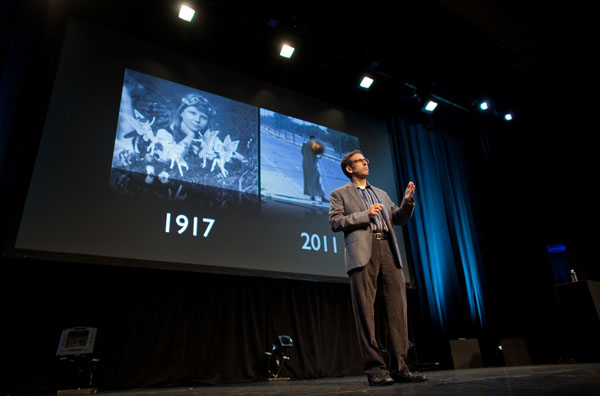
Photo by Michael Treeola
I can still remember a phone call I received in 1996 when I had just joined the Photoshop team at Adobe. At first I actually thought it might be a prank call: a Photoshop customer was telling me that they had been hired by the local police department to analyze photos of an alleged murder.
Years later, what I remember most about that call is that he wanted to enhance a photo of the victim’s neck to determine whether the person had been strangled before or after falling off a cliff. He wanted to know if I could suggest any resources for how to use Photoshop to analyze forensic photographs.
At the time, I couldn’t. It was hard enough for me to even believe that I was having such a phone call after just joining the team that made, what I thought, was simply the best creative software tool in the world. A question concerning life and death felt completely out of place! Wasn’t Photoshop just for creative professionals who wanted to edit their digital photos?
Over time, though, I learned that Photoshop’s influence extends far beyond the creative realm, and that its tools have deep implications for how we evaluate photographs’ reality – which in turn impacts the law, politics, and even our own self-image. And those implications have only become more important as photography becomes an ever more pervasive means of communication in our society.
I still think that Photoshop is the world’s greatest creative software, but I now know that its amazing and empowering capabilities can complicate things for people who are just trying to make sense of the facts. At Adobe, I was regularly contacted by the media regarding this or that photo hoax that had been inadvertently released as “news.” They’d ask me for recommendations on how to tell when a photo had been manipulated, and my answers were never as satisfying as I wanted them to be. And, of course, as the tools became easier to use, magazines and advertising agencies began to follow suit and use it for excessive manipulation of models and celebrities. There were always the questions of just how much is too much.
Recently, we’ve seen a bit of an anti-Photoshop movement with some efforts to pass legislation restricting the amount of photo manipulation in the media. Just this year, Israel passed a law requiring disclaimers on advertisements in which models have been digitally slimmed (and also legislating a minimum body mass index for professional models).
Though it’s understandable where they’re coming from, many of these efforts are misplaced – particularly when they frame things in black-and-white “pro- or anti-Photoshop” terms. Photoshop is an important and necessary tool in photo production and in creative expression. The issue shouldn’t be whether Photoshop was used, but how it was used and in what context.
It’s in the midst of this environment that I left Adobe and started my own company, Fourandsix Technologies, along with Dr. Hany Farid, a pioneer in the analysis of digital images for evidence of manipulation. So now, 16 years after that unexpected phone call, I find myself working full-time on solving the issues of image authenticity, while leaving the complementary work of photo manipulation to the talented friends I left behind at Adobe. In September we introduced our very first product, FourMatch. FourMatch is a Photoshop extension, and it can instantly tell you whether a JPEG file is an unmodified original from a digital camera.
FourMatch still represents just the first step in an ongoing challenge, however. We have a long list of things we still want to accomplish in order to help viewers to regain their truthful bearings within a photographic world that allows for so much fantasy.
Kevin spoke about the declining trust in photography at Luminance 2012 – watch Kevin’s 20-minute TED-style talk, and then post your thoughts – which side of the photo manipulation debate are you on?

Next Post: Live Video: Dan Milnor & The New Photo Book
Previous Post: Hurricane Sandy and PhotoShelter
You May Also Like
-
Expert Advice and Top Tips from Pro Photographers for 2024
What’s one piece of advice you would give to aspiring or up-and-coming photographers? We asked nine experienced photographers and PhotoShelter members to share their top tips for those looking to get ahead in their photography careers. From finding your own visual voice to working with a mentor or photo assistant, each piece of advice listed […]
-
What’s On Your Photography Holiday Wish List?
The holiday season is around the corner and that means it’s the perfect opportunity to upgrade your gear or find that special gift for the visual storyteller or photography enthusiast in your life. We reached out to a handful of renowned photographers and PhotoShelter members, each with their unique styles and preferences, to bring you […]
-
Share a Photo That Means the World to You
We all have a photo that means the world to us. Maybe it’s one we made ourselves – the first photo from our first camera. It could be an old family photo in a beloved photo album. Or maybe it’s an iconic image that hangs on our wall at home. With World Photography Day coming […]