Share
Talking Budget With Your Clients
Ilise Benun is the founder of Marketing Mentor, where she helps creative professionals solve their business growth challenges. Ilise recently publi...
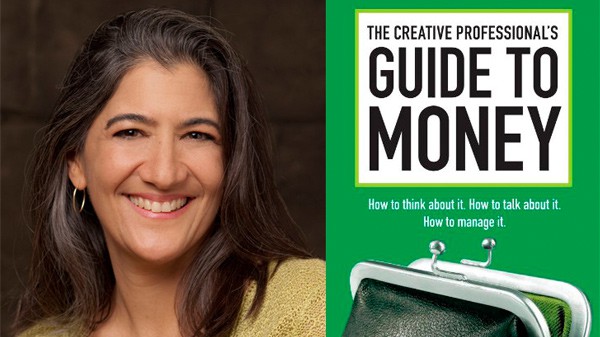
Ilise Benun is the founder of Marketing Mentor, where she helps creative professionals solve their business growth challenges. Ilise recently published a new book, The Creative Professional’s Guide to Money. The book is filled with wisdom on a topic that many photographers find uncomfortable, confusing, and hard to manage. We grabbed a few minutes with Ilise to talk about a particularly sticky related issue – when and how to directly ask your clients about their budget while pitching for new business.
Are we a good fit?
The primary reason to bring up the budget issue is to identify early on if the pitch is even worth making. Many photographers waste a lot of time talking to prospects who can’t afford them. You’ll find out sooner or later if the client can afford your services, so being straightforward and talking budget can help save both parties some time. But how early is too early? Ilise suggests if you suspect the prospect likely can’t afford you, broach the budget question sooner. If you think they likely can afford you, it is ok to wait until later on in your pitch.
Recognize the conversation itself won’t be a dealbreaker
Avoid building up assumptions in your head that can make having the conversation more uncomfortable than it needs to be. Often, photographers will be afraid to start talking money because it may lead to losing the project. Talking about money isn’t going to prevent you from getting the job – the client not being able to afford to pay you fairly will. (But, we’re assuming that’s a job you don’t want anyway.)
A “teachable moment”
Talking budget directly indicates your expectation is that they actually have a budget. This implies that they should have budget to pay you. If they don’t have a budget planned out, or an amount dedicated to the photography portion of a project, they may truly have no idea about the cost of good photography. Maybe – just maybe – they’ve never done a project like this before.
In other cases, the client isn’t going to tell you their budget outright. This is likely because they have a number in mind but they’re afraid to tell you, because they worry you’ll take it all. Often they’ll put the question back to you: “Well, what do you charge?”
This presents an opportunity to educate the client about the value of your services. Don’t be afraid to put some numbers on the table and give a range of fees, but be specific about the services that come along with each level. Then let the client dictate where their needs put them along the fee spectrum but be clear about the value they lose by going down to cheaper levels. Ilise suggests providing three options across a wide range of fees. (People like to pick the middle.)
Popping the question
This really isn’t so hard. Remember, it’s business, not personal. (Recognize that sometimes the client may feel equally awkward talking about money too.) You can respectfully and gracefully acknowledge that this is an important conversation to have.
After you’ve talked about the specs and the “fun” details, you can then transition by saying, “OK let’s talk about budget.” Recognize that most clients will actually expect you to bring cost up at this point. Being direct is important. Any variation of the following should work fine: “What is your budget? Do you have a budget? What budget have you allocated.”
It’s OK to push
Freelancers often have a really hard time pushing the conversation when they don’t get an answer. Even if the client says no (“I don’t have a budget”), they likely have some number in mind. Keep pushing forward. Explain why you’re pushing. “It will help me provide what you need if I can get a better sense of where you fall on this spectrum, and if I’m the right person to provide that service.” That way nobody is wasting their time. Returning to your pre-determined range of numbers will give them something to react to and keep the conversation going.
Avoiding a big red flag
When someone doesn’t want to talk about money at all, they may say “just give me a proposal.” That may be a red flag about whether or not they’re a good client to work with in the first place. In these cases, it helps to have a standard document that you don’t have to put a ton of effort into (i.e. a mini proposal that outlines a range of services and fees) Explain that this is not a formal rate card or proposal, but rather a document to put numbers on the table to focus the conversation on numbers as relates to this project. This saves you time and gives the client possible prices to react to.
Avoid email
Ilise suggests that photographers avoid having the budget discussion over email. In-person is best, and over the phone is better than email. That way, it’s a real conversation where you can respond in real time to visual and voice cues, and even facial gestures. Plenty of key elements to this critical conversation get lost in translation via email.
______________________________________________________________________________
Ilise recently contributed an article “3 Steps to Becoming an Expert (In Your Client’s Eyes)”
to PhotoShelter’s free guide, The Freelancer’s Online Marketing Blueprint.
Next Post: Talking Shop with The Roadmap
Previous Post: Katie Orlinsky in the New York Times
You May Also Like
-

Expert Advice and Top Tips from Pro Photographers for 2024
What’s one piece of advice you would give to aspiring or up-and-coming photographers? We asked nine experienced photographers and PhotoShelter members to share their top tips for those looking to get ahead in their photography careers. From finding your own visual voice to working with a mentor or photo assistant, each piece of advice listed […]
-

What’s On Your Photography Holiday Wish List?
The holiday season is around the corner and that means it’s the perfect opportunity to upgrade your gear or find that special gift for the visual storyteller or photography enthusiast in your life. We reached out to a handful of renowned photographers and PhotoShelter members, each with their unique styles and preferences, to bring you […]
-

Share a Photo That Means the World to You
We all have a photo that means the world to us. Maybe it’s one we made ourselves – the first photo from our first camera. It could be an old family photo in a beloved photo album. Or maybe it’s an iconic image that hangs on our wall at home. With World Photography Day coming […]